Hokusai, Hiroshige and Kuniyoshi in 3D: YAKUZA × Japanese Masters
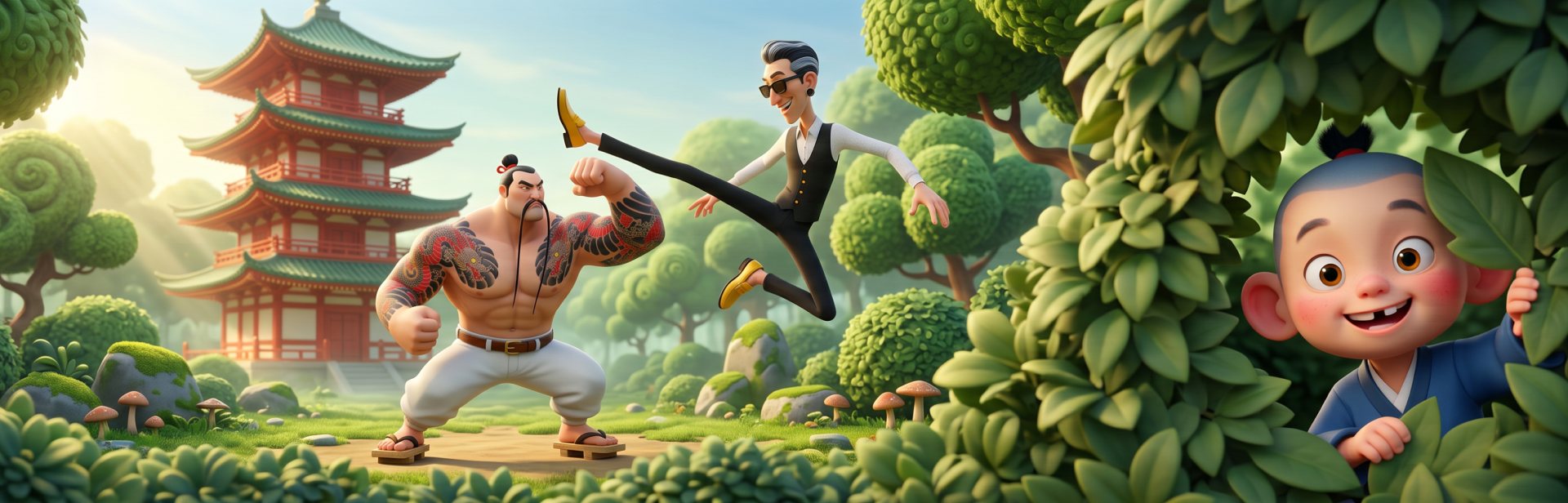
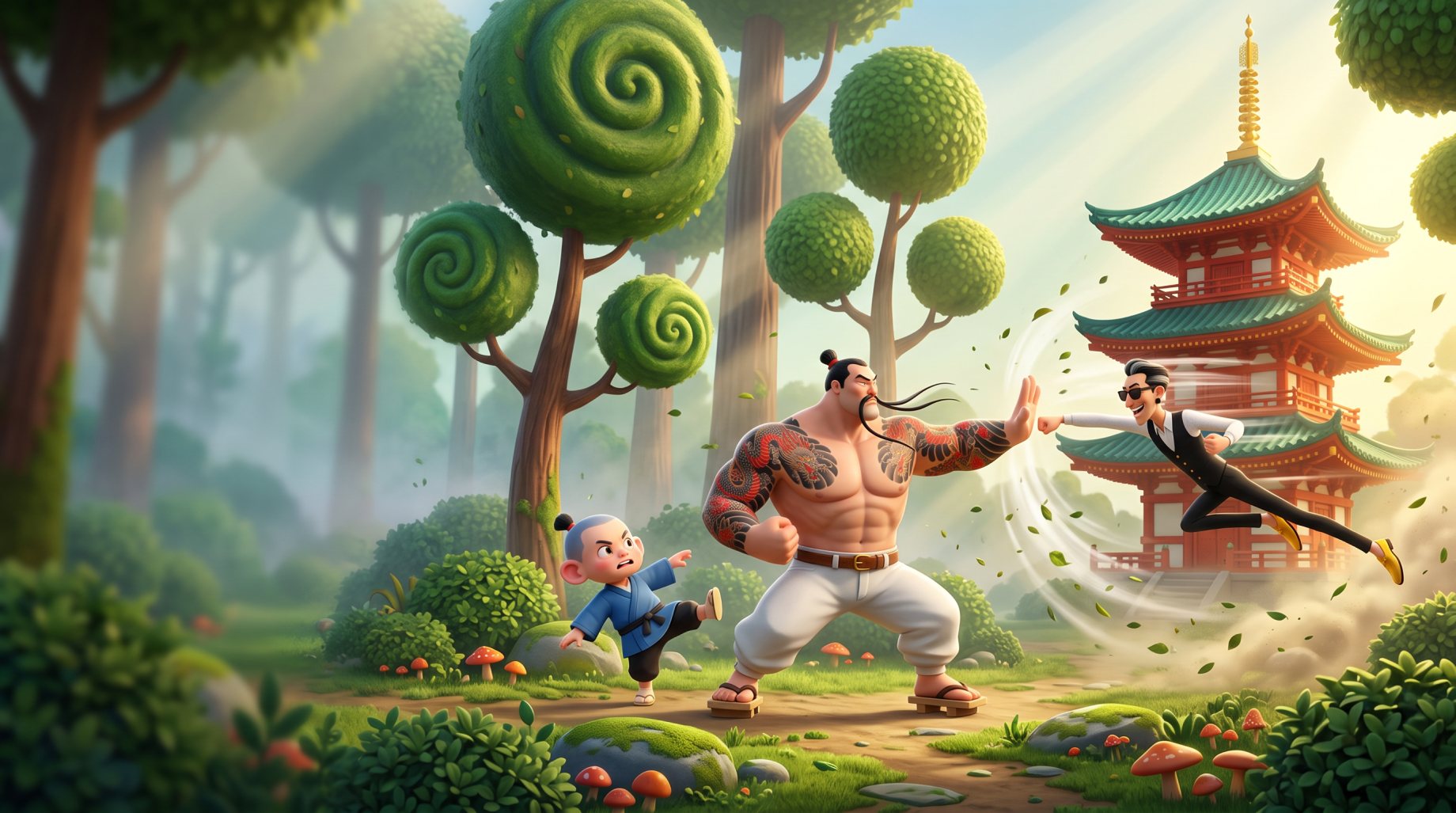
Long before 3D animation, Japanese artists were already making some of the most dynamic images in the world: giant waves, angry tigers, skeletons the size of a palace. In our art series, YAKUZA × Japanese Masters, we take famous Japanese artworks and drop our three characters right into them.
Here is what ukiyo-e is, who the masters were, and the stories behind the artworks we reimagine.
What is ukiyo-e?
Ukiyo-e means “pictures of the floating world”. It is a style of Japanese art that was hugely popular during the Edo period (1603–1868), made mostly as woodblock prints. Because prints could be made many times from the same carved blocks, they were affordable, and ordinary people bought them the way we buy posters today.
The subjects were the world people loved: kabuki actors, sumo wrestlers, famous landscapes, legends, ghosts and heroes. Bold outlines, flat areas of colour and dramatic compositions make ukiyo-e feel surprisingly modern, almost like animation keyframes. That is exactly why it works so well in 3D.
The masters in our series
Katsushika Hokusai (1760–1849)
The most famous Japanese artist of all time. Hokusai worked for about seventy years and wrote that nothing he drew before the age of seventy was worth noticing. He created The Great Wave in his early seventies and kept painting until the last year of his life.
Utagawa Hiroshige (1797–1858)
The master of landscape, rain, snow and moonlight. His series One Hundred Famous Views of Edo was so admired in Europe that Vincent van Gogh painted his own copies of two of its prints in 1887: the plum garden at Kameido and the sudden shower over the Shin-Ōhashi bridge.
Utagawa Kuniyoshi (1798–1861)
The wild one. Kuniyoshi loved warriors, monsters, legends and cats, and he filled entire triptychs with a single huge creature. If a print has a skeleton or a giant whale in it, it is probably Kuniyoshi.
Tōshūsai Sharaku
The mystery. Sharaku made around 140 bold portraits of kabuki actors in about ten months, in 1794 and 1795, and then disappeared. Nobody knows for sure who he was.
The artworks, reimagined
The Great Wave off Kanagawa (Hokusai, c. 1831)
Part of Hokusai’s series Thirty-six Views of Mount Fuji. A giant wave curls over three boats while Mount Fuji sits tiny in the distance. In our version Horiyoshi stands calmly in a boat, Shige screams, and Horichiro surfs the wave.
Red Fuji (Hokusai, c. 1831)
Its real title is Fine Wind, Clear Morning, from the same series. Mount Fuji glows red in the early morning light. Ours adds a mountain path, two characters walking at a steady pace, and Shige very far behind.
The Skeleton Spectre (Kuniyoshi, c. 1844)
In Takiyasha the Witch and the Skeleton Spectre, a giant skeleton crawls out of a ruined palace. We posted it for Halloween, with Shige hiding behind Horiyoshi and Horichiro waving hello.
Musashi and the Giant Whale (Kuniyoshi, c. 1847)
The legendary swordsman Miyamoto Musashi fights a whale bigger than an island. In 3D, Horiyoshi stands on the whale’s back as if it were a rock, Shige hangs from its tail, and Horichiro rides the water spout.
Kabuki Portrait (Sharaku, 1794)
Sharaku’s actors make fierce faces with wide eyes and clawed hands. Shige was born for this one. Horichiro copies him in the background.
Tiger in the Snow (Hokusai, 1849)
Painted in the last year of Hokusai’s life. A tiger looks up into falling snow. Our version is a staring contest between the tiger and Horiyoshi. It is still going.
Why these artworks?
These masterpieces are more than 150 years old and belong to everyone. They are in the public domain, held by museums around the world, and many can be seen online in high resolution. We study each original closely, keep its composition and colours, and then ask one question: what would happen if Horiyoshi, Shige and Horichiro were standing inside it?
We hope the series makes a few people look up the originals. They are even better than ours. Horiyoshi agrees. He said so in one word.
Where to see the series
A new YAKUZA × Japanese Masters artwork comes out every Thursday on Instagram, TikTok, Facebook and YouTube, between the regular Monday, Wednesday and Friday episodes. You can browse the pictures in the gallery on our website, and meet the three characters in our character guide.